Showing posts with label Atta Ur rehman. Show all posts

Saturday, 14 July 2012

The "Mystery" of the Bermuda Triangle


The five avengers lost on December 5th, 1945 are sometimes known as "The Lost Squadron." 
(Copyright Lee Krystek, 2011)

The Bermuda Triangle (sometimes also referred to as the Devil's Triangle) is a stretch of the Atlantic Ocean bordered by a line from Florida to the islands of Bermuda, to Puerto Rico and then back to Florida. It is one of the biggest mysteries of our time - that perhaps isn't really a mystery.
The term "Bermuda Triangle" was first used in an article written by Vincent H. Gaddis for Argosy magazine in 1964. In the article, Gaddis claimed that in this strange sea a number of ships and planes had disappeared without explanation. Gaddis wasn't the first one to come to this conclusion, either. As early as 1952, George X. Sands, in a report in Fate magazine, noted what seemed like an unusually large number of strange accidents in that region.
In 1969 John Wallace Spencer wrote a book called Limbo of the Lost specifically about the Triangle and, two years later, a feature documentary on the subject, The Devil's Triangle, was released. These, along with the bestseller The Bermuda Triangle, published in 1974, permanently registered the legend of the "Hoodoo Sea" within popular culture.
Why do ships and planes seem to go missing in the region? Some authors suggested it may be due to a strange magnetic anomaly that affects compass readings (in fact they claim Columbus noted this when he sailed through the area in 1492). Others theorize that methane eruptions from the ocean floor may suddenly be turning the sea into a froth that can't support a ship's weight so it sinks (though there is no evidence of this type of thing happening in the Triangle for the past 15,000 years). Several books have gone as far as conjecturing that the disappearances are due to an intelligent, technologically advanced race living in space or under the sea.

Kusche's Theory
In 1975 Larry Kusche, a librarian at Arizona State University, reached a totally different conclusion. Kusche decided to investigate the claims made by these articles and books. What he found he published in his own book entitled The Bermuda Triangle Mystery-Solved. Kusche had carefully dug into records other writers had neglected. He found that many of the strange accidents were not so strange after all. Often a Triangle writer had noted a ship or plane had disappeared in "calms seas" when the record showed a raging storm had been in progress. Others said ships had "mysteriously vanished" when their remains had actually been found and the cause of their sinking explained. In one case a ship listed missing in the Triangle actually had disappeared in the Pacific Ocean some 3,000 miles away! The author had confused the name of the Pacific port the ship had left with a city of the same name on the Atlantic coast.
More significantly, a check of Lloyd's of London's accident records by the editor of Fate in 1975 showed that the Trianglewas no more dangerous than any other part of the ocean. U.S. Coast Guard records confirmed this and since that time no good arguments have ever been made to refute those statistics. So many argue that the Bermuda Triangle mystery has disappeared, in the same way many of its supposed victims vanished.

Even though the Bermuda Triangle isn't a true mystery, this region of the sea certainly has had its share of marine tragedy. This region is one of the heaviest traveled areas of ocean in the world. Both small boats and commercial ships ply its waters along with airliners, military aircraft and private planes as they come to and from both the islands and more distant ports in Europe, South America and Africa. The weather in this region can make traveling hazardous also. The summer brings hurricanes while the warm waters of the Gulf Stream promote sudden storms. With this much activity in a relatively small region it isn't surprising that a large number of accidents occur. Some of the ones commonly connected to the Triangle story are:
The USS Cyclops Sinking
One of the first stories connected to the Triangle legend and the most famous ship lost in the region was the USS Cyclops which disappeared in 1918. The 542 foot long Cyclops was launched in 1910 and served as a collier ( a ship that carries coal) for the U.S. Navy during World War I. The vessel was on its way from Bahia, Salvador, to Baltimore, Maryland, but never arrived. After it had made an unscheduled stop at Barbados on March 3rd and 4th to take on additional supplies, it disappeared without a trace. No wreckage from the ship was ever found and no distress signal was received. The deaths of the 306 crew and passengers of the USS Cyclops remains the single largest loss of life in U.S. Naval history not directly involving combat.

The USS Cyclops in a 1911 photograph. (USN Photo)

While the sinking of the Cyclopsremains a mystery, the incident could have happened anywhere between Barbados and Baltimore, not necessarily in the Bermuda Triangle. Proponents of the Bermuda Triangle theory point to the lack of a distress call as evidence of a paranormal end for the vessel, but the truth is that wireless communications in 1918 were unreliable and it would not have been unusual for a rapidly-sinking vessel to not have had a chance to send a successful distress call before going under.
SS Marine Sulphur Queen Vanishes
The SS Marine Sulphur Queen, a tanker ship carrying molten sulphur, disappeared off the southern coast of Florida in 1963. The crew of 39 was all lost and no wreckage from the tanker was ever found. While the disappearance of the ship is mentioned in several books about the Triangle, authors don't always include that the Coast Guard concluded that the vessel was in deplorable shape and should have never gone to sea at all. Fires erupted with regularity on the ship. Also, this class of vessel was known to have a "weak back", which means the keel would split when weakened by corrosion causing the ship to break in two. The ship's structure had been further compromised by a conversion from its original mission as an oil tanker to carrying molten sulphur. The conversion had left the vessel with an extremely high center of gravity, increasing the chance that it would capsize. The SS Marine Sulphur Queen was all-in-all a disaster waiting to happen and it seems unfair to blame its demise on the Bermuda Triangle.
.

A Douglas DC-3 airliner of the same type as NC16002 (Wikipedia Commons)

The Disappearance of NC16002
NC16002 was a DC-3 passenger plane that vanished on the night of December 28, 1948, during a flight from San Juan, Puerto Rico, to Miami, Florida. The weather was fine with high visibility and the flight was, according to the pilot, within 50 miles of Miami when it disappeared with its three crew members and twenty-nine passengers. Though no probable cause for the loss was determined by the official investigation, it is known that the plane's batteries were not fully charged on takeoff and this may have interfered with communications during the flight. A message from Miami to the plane that the direction of the wind had changed may have not been received by the pilot, causing him to fly up to fifty miles off course.
The Fate of Flight 19
The tale of Flight 19 started on December 5th, 1945. Five Avenger torpedo bombers lifted into the air from the Naval Air Station at Fort Lauderdale, Florida, at 2:10 in the afternoon. It was a routine practice mission and the flight was composed of all students except for the Commander, a Lt. Charles Taylor.
The mission called for Taylor and his group of 13 men to fly due east 56 miles to Hens and Chicken Shoals to conduct practice bombing runs. When they had completed that objective, the flight plan called for them to fly an additional 67 miles east, and then turn north for 73 miles and finally straight back to base, a distance of 120 miles. This course would take them on a triangular path over the sea.
Video: The Fate of Flight 19

About an hour and a half after the flight had left, Lt. Robert Cox at the base picked up a radio transmission from Taylor. Taylor indicated that his compasses were not working, but he believed himself to be somewhere over the Florida Keys (the Keys are a long chain of islands south of the Florida mainland). Cox urged him to fly north toward Miami; if Taylor was sure the flight was over the Keys.
Planes today have a number of ways that they can check their current position including listening to a set of GPS (Global Positioning Satellites) in orbit around the earth. It is almost impossible for a pilot to get lost if he has the right equipment and uses it properly. In 1945, though, planes flying over water had to depend on knowing their starting point, how long and fast they had flown, and in what direction. If a pilot made a mistake with any of these figures, he was lost. Over the ocean there were no landmarks to set him right.
Navigational Confusion
Apparently Taylor had become confused at some point in the flight. He was an experienced pilot, but hadn't spent a lot of time flying east toward the Bahamas which was where he was going on that day. For some reason Taylor apparently thought the flight had started out in the wrong direction and had headed south toward the Keys, instead of east. This thought was to color his decisions throughout the rest of the flight with deadly results.

The more Taylor took his flight north to try to get out of the Keys, the further out to sea the Avengers actually traveled. As time went on, snatches of transmissions were picked up on the mainland indicating the other Flight 19 pilots were trying to get Taylor to change course. "If we would just fly west," one student told another, "we would get home." He was right
By 4:45 P.M. it was obvious to the people on the ground that Taylor was hopelessly lost. He was urged to turn control of the flight over to one of his students, but apparently he didn't. As it grew dark, communications deteriorated. From the few words that did get through it was apparent Taylor was still flying north and east, the wrong direction.
At 5:50 P.M. the ComGulf Sea Frontier Evaluation Center managed get a fix on Flight 19's weakening signals. It was apparently east of New Smyrna Beach, Florida. By then communications were so poor that this information could not be passed to the lost planes.
At 6:20 a Dumbo flying boat was dispatched to try and find Flight 19 and guide it back. Within the hour two more planes, Martin Mariners, joined the search. Hope was rapidly fading for Flight 19 by then. The weather was getting rough and the Avengers were very low on fuel.
Two Martin Mariners were supposed to rendezvous at the search zone. The second one, designated Training 49, never showed up, joining the 5 Avengers as "missing."
The last transmission from Flight 19 was heard at 7:04 P.M. Planes searched the area through the night and the next day. There was no sign of the Avengers.
Nor did the authorities really expect to find much. The Avengers, crashing when their fuel was exhausted, would have been sent to the bottom in seconds by the 50 foot waves of the storm. As one of Taylor's colleagues noted, "...they didn't call those planes 'Iron Birds' for nothing. They weighed 14,000 pounds empty. So when they ditched, they went down pretty fast."

A Mariner similar to Training 49 (USN Photo)

What happened to the missing Martin Mariner? Well, the crew of the SS Gaines Mill observed an explosion over the water shortly after the Mariner had taken off. They headed toward the site and there they saw what looked like oil and airplane debris floating on the surface. None of it was recovered because of the bad weather, but there seems little doubt this was the remains of the Mariner. The plane had a reputation as being a "flying bomb" which would burst into flame from even a single, small spark. Speculation is that one of 22 men on board, unaware that the unpressurized cabin contained gas fumes, lit a cigarette, causing the explosion.
Missing Avengers become the Triangle's "Lost Squadron"
So how did this tragedy turn into a Bermuda Triangle mystery? The Navy's original investigation concluded the accident had been caused by Taylor's navigational confusion. According to those that knew him he was a good pilot, but often navigated "flying by the seat of his pants" and had gotten lost in the past. Taylor's mother refused to accept that and finally got the Navy to change the report to read that the disaster was for "causes or reasons unknown." This may have spared the woman's feelings, but blurred the actual facts.
The saga of Flight 19 is probably the most repeated story about the Bermuda Triangle. Vincent Gaddis put the tale into the same Argosy magazine article where he coined the term "Bermuda Triangle" in 1964 and thetwo have been connected ever since. The planes and their pilots even found their way into the science fiction film classic, Close Encounters of the Third Kind.
Where is Flight 19 now? Well, in 1991 five Avengers were found in 750 feet of water off the coast of Florida by the salvage ship Deep Sea. Examination of the plane's ID numbers, however, showed that they were not from Flight 19 (as many as 139 Avengers were thought to have gone into the water off the coast of Florida during the war). It seems the final resting place of the lost squadron and their crews is still a real Bermuda Triangle mystery.
A sister tanker to SS Marine Sulphur Queen which suffered a failure of the keel and split in two.
The five avengers lost on December 5th, 1945 are sometimes known as "The Lost Squadron." (Copyright Lee Krystek, 2011)

The Bermuda Triangle (sometimes also referred to as the Devil's Triangle) is a stretch of the Atlantic Ocean bordered by a line from Florida to the islands of Bermuda, to Puerto Rico and then back to Florida. It is one of the biggest mysteries of our time - that perhaps isn't really a mystery.
The term "Bermuda Triangle" was first used in an article written by Vincent H. Gaddis for Argosy magazine in 1964. In the article, Gaddis claimed that in this strange sea a number of ships and planes had disappeared without explanation. Gaddis wasn't the first one to come to this conclusion, either. As early as 1952, George X. Sands, in a report in Fate magazine, noted what seemed like an unusually large number of strange accidents in that region.
In 1969 John Wallace Spencer wrote a book called Limbo of the Lost specifically about the Triangle and, two years later, a feature documentary on the subject, The Devil's Triangle, was released. These, along with the bestseller The Bermuda Triangle, published in 1974, permanently registered the legend of the "Hoodoo Sea" within popular culture.
Why do ships and planes seem to go missing in the region? Some authors suggested it may be due to a strange magnetic anomaly that affects compass readings (in fact they claim Columbus noted this when he sailed through the area in 1492). Others theorize that methane eruptions from the ocean floor may suddenly be turning the sea into a froth that can't support a ship's weight so it sinks (though there is no evidence of this type of thing happening in the Triangle for the past 15,000 years). Several books have gone as far as conjecturing that the disappearances are due to an intelligent, technologically advanced race living in space or under the sea.

Kusche's Theory
In 1975 Larry Kusche, a librarian at Arizona State University, reached a totally different conclusion. Kusche decided to investigate the claims made by these articles and books. What he found he published in his own book entitled The Bermuda Triangle Mystery-Solved. Kusche had carefully dug into records other writers had neglected. He found that many of the strange accidents were not so strange after all. Often a Triangle writer had noted a ship or plane had disappeared in "calms seas" when the record showed a raging storm had been in progress. Others said ships had "mysteriously vanished" when their remains had actually been found and the cause of their sinking explained. In one case a ship listed missing in the Triangle actually had disappeared in the Pacific Ocean some 3,000 miles away! The author had confused the name of the Pacific port the ship had left with a city of the same name on the Atlantic coast.
More significantly, a check of Lloyd's of London's accident records by the editor of Fate in 1975 showed that the Trianglewas no more dangerous than any other part of the ocean. U.S. Coast Guard records confirmed this and since that time no good arguments have ever been made to refute those statistics. So many argue that the Bermuda Triangle mystery has disappeared, in the same way many of its supposed victims vanished.

Even though the Bermuda Triangle isn't a true mystery, this region of the sea certainly has had its share of marine tragedy. This region is one of the heaviest traveled areas of ocean in the world. Both small boats and commercial ships ply its waters along with airliners, military aircraft and private planes as they come to and from both the islands and more distant ports in Europe, South America and Africa. The weather in this region can make traveling hazardous also. The summer brings hurricanes while the warm waters of the Gulf Stream promote sudden storms. With this much activity in a relatively small region it isn't surprising that a large number of accidents occur. Some of the ones commonly connected to the Triangle story are:
The USS Cyclops Sinking
One of the first stories connected to the Triangle legend and the most famous ship lost in the region was the USS Cyclops which disappeared in 1918. The 542 foot long Cyclops was launched in 1910 and served as a collier ( a ship that carries coal) for the U.S. Navy during World War I. The vessel was on its way from Bahia, Salvador, to Baltimore, Maryland, but never arrived. After it had made an unscheduled stop at Barbados on March 3rd and 4th to take on additional supplies, it disappeared without a trace. No wreckage from the ship was ever found and no distress signal was received. The deaths of the 306 crew and passengers of the USS Cyclops remains the single largest loss of life in U.S. Naval history not directly involving combat.

The USS Cyclops in a 1911 photograph. (USN Photo)

While the sinking of the Cyclopsremains a mystery, the incident could have happened anywhere between Barbados and Baltimore, not necessarily in the Bermuda Triangle. Proponents of the Bermuda Triangle theory point to the lack of a distress call as evidence of a paranormal end for the vessel, but the truth is that wireless communications in 1918 were unreliable and it would not have been unusual for a rapidly-sinking vessel to not have had a chance to send a successful distress call before going under.
SS Marine Sulphur Queen Vanishes
The SS Marine Sulphur Queen, a tanker ship carrying molten sulphur, disappeared off the southern coast of Florida in 1963. The crew of 39 was all lost and no wreckage from the tanker was ever found. While the disappearance of the ship is mentioned in several books about the Triangle, authors don't always include that the Coast Guard concluded that the vessel was in deplorable shape and should have never gone to sea at all. Fires erupted with regularity on the ship. Also, this class of vessel was known to have a "weak back", which means the keel would split when weakened by corrosion causing the ship to break in two. The ship's structure had been further compromised by a conversion from its original mission as an oil tanker to carrying molten sulphur. The conversion had left the vessel with an extremely high center of gravity, increasing the chance that it would capsize. The SS Marine Sulphur Queen was all-in-all a disaster waiting to happen and it seems unfair to blame its demise on the Bermuda Triangle.
.

A Douglas DC-3 airliner of the same type as NC16002 (Wikipedia Commons)

The Disappearance of NC16002
NC16002 was a DC-3 passenger plane that vanished on the night of December 28, 1948, during a flight from San Juan, Puerto Rico, to Miami, Florida. The weather was fine with high visibility and the flight was, according to the pilot, within 50 miles of Miami when it disappeared with its three crew members and twenty-nine passengers. Though no probable cause for the loss was determined by the official investigation, it is known that the plane's batteries were not fully charged on takeoff and this may have interfered with communications during the flight. A message from Miami to the plane that the direction of the wind had changed may have not been received by the pilot, causing him to fly up to fifty miles off course.
The Fate of Flight 19
The tale of Flight 19 started on December 5th, 1945. Five Avenger torpedo bombers lifted into the air from the Naval Air Station at Fort Lauderdale, Florida, at 2:10 in the afternoon. It was a routine practice mission and the flight was composed of all students except for the Commander, a Lt. Charles Taylor.
The mission called for Taylor and his group of 13 men to fly due east 56 miles to Hens and Chicken Shoals to conduct practice bombing runs. When they had completed that objective, the flight plan called for them to fly an additional 67 miles east, and then turn north for 73 miles and finally straight back to base, a distance of 120 miles. This course would take them on a triangular path over the sea.
Video: The Fate of Flight 19

About an hour and a half after the flight had left, Lt. Robert Cox at the base picked up a radio transmission from Taylor. Taylor indicated that his compasses were not working, but he believed himself to be somewhere over the Florida Keys (the Keys are a long chain of islands south of the Florida mainland). Cox urged him to fly north toward Miami; if Taylor was sure the flight was over the Keys.
Planes today have a number of ways that they can check their current position including listening to a set of GPS (Global Positioning Satellites) in orbit around the earth. It is almost impossible for a pilot to get lost if he has the right equipment and uses it properly. In 1945, though, planes flying over water had to depend on knowing their starting point, how long and fast they had flown, and in what direction. If a pilot made a mistake with any of these figures, he was lost. Over the ocean there were no landmarks to set him right.
Navigational Confusion
Apparently Taylor had become confused at some point in the flight. He was an experienced pilot, but hadn't spent a lot of time flying east toward the Bahamas which was where he was going on that day. For some reason Taylor apparently thought the flight had started out in the wrong direction and had headed south toward the Keys, instead of east. This thought was to color his decisions throughout the rest of the flight with deadly results.

The more Taylor took his flight north to try to get out of the Keys, the further out to sea the Avengers actually traveled. As time went on, snatches of transmissions were picked up on the mainland indicating the other Flight 19 pilots were trying to get Taylor to change course. "If we would just fly west," one student told another, "we would get home." He was right
By 4:45 P.M. it was obvious to the people on the ground that Taylor was hopelessly lost. He was urged to turn control of the flight over to one of his students, but apparently he didn't. As it grew dark, communications deteriorated. From the few words that did get through it was apparent Taylor was still flying north and east, the wrong direction.
At 5:50 P.M. the ComGulf Sea Frontier Evaluation Center managed get a fix on Flight 19's weakening signals. It was apparently east of New Smyrna Beach, Florida. By then communications were so poor that this information could not be passed to the lost planes.
At 6:20 a Dumbo flying boat was dispatched to try and find Flight 19 and guide it back. Within the hour two more planes, Martin Mariners, joined the search. Hope was rapidly fading for Flight 19 by then. The weather was getting rough and the Avengers were very low on fuel.
Two Martin Mariners were supposed to rendezvous at the search zone. The second one, designated Training 49, never showed up, joining the 5 Avengers as "missing."
The last transmission from Flight 19 was heard at 7:04 P.M. Planes searched the area through the night and the next day. There was no sign of the Avengers.
Nor did the authorities really expect to find much. The Avengers, crashing when their fuel was exhausted, would have been sent to the bottom in seconds by the 50 foot waves of the storm. As one of Taylor's colleagues noted, "...they didn't call those planes 'Iron Birds' for nothing. They weighed 14,000 pounds empty. So when they ditched, they went down pretty fast."

A Mariner similar to Training 49 (USN Photo)

What happened to the missing Martin Mariner? Well, the crew of the SS Gaines Mill observed an explosion over the water shortly after the Mariner had taken off. They headed toward the site and there they saw what looked like oil and airplane debris floating on the surface. None of it was recovered because of the bad weather, but there seems little doubt this was the remains of the Mariner. The plane had a reputation as being a "flying bomb" which would burst into flame from even a single, small spark. Speculation is that one of 22 men on board, unaware that the unpressurized cabin contained gas fumes, lit a cigarette, causing the explosion.
Missing Avengers become the Triangle's "Lost Squadron"
So how did this tragedy turn into a Bermuda Triangle mystery? The Navy's original investigation concluded the accident had been caused by Taylor's navigational confusion. According to those that knew him he was a good pilot, but often navigated "flying by the seat of his pants" and had gotten lost in the past. Taylor's mother refused to accept that and finally got the Navy to change the report to read that the disaster was for "causes or reasons unknown." This may have spared the woman's feelings, but blurred the actual facts.
The saga of Flight 19 is probably the most repeated story about the Bermuda Triangle. Vincent Gaddis put the tale into the same Argosy magazine article where he coined the term "Bermuda Triangle" in 1964 and thetwo have been connected ever since. The planes and their pilots even found their way into the science fiction film classic, Close Encounters of the Third Kind.
Where is Flight 19 now? Well, in 1991 five Avengers were found in 750 feet of water off the coast of Florida by the salvage ship Deep Sea. Examination of the plane's ID numbers, however, showed that they were not from Flight 19 (as many as 139 Avengers were thought to have gone into the water off the coast of Florida during the war). It seems the final resting place of the lost squadron and their crews is still a real Bermuda Triangle mystery.
A sister tanker to SS Marine Sulphur Queen which suffered a failure of the keel and split in two.


Web Designing Karachi hosting packages Web Designing e-commerce CMS website designing karachi Web Designing Pakistan Website Design Website Designing Web Hosting Web Design karachi online shopping laptop in karachi floor levelling Polished concrete sydney epoxy coatings glue removal concrete repairs concrete coatingsAtta ur rehman Online shopping Zakat packages

Thursday, 12 July 2012

M.M.ALAM


Recent Pic Of M.ALAM who destroyed 5 Fighter Jets Of India within the space of 30-40 seconds in 1965 War. He lives in 120 sq. yds of Karachi!!!no One Remember Him!!! He migrated to Pakistan From India ( Bihar) at the time of partition, and Proved his love for Pakistan in 1965.Respect your Legend!!


Web Designing Karachi hosting packages Web Designing e-commerce CMS website designing karachi Web Designing Pakistan Website Design Website Designing Web Hosting Web Design karachi online shopping laptop in karachi floor levelling Polished concrete sydney epoxy coatings glue removal concrete repairs concrete coatingsAtta ur rehman

Sunday, 8 July 2012

How Authorship (and Google+) Will Change Linkbuilding


Google's relationship with links has changed over the last 15 years - it started out as a love affair but nowadays the Facebook status would probably read: "It's Complicated". I think Google are beginning to suffer from trust issues, brought about by well over a decade of the SEO community manipulating the link graph. In this post I'm going to lay out how I think Authorship, and Google+ are one of the ways that Google are trying to remedy this situation.
I'll move on to what that means we should be thinking about doing differently in the future, and am sharing a free link-building tool you can all try out to experiment with these ideas. The tool will allow you to see who is linking to you rather than where is linking to you, and will provide you with social profiles for these authors, as well as details of where else they write.
To start I want to quickly look at a brief history of Google's view of links.

Are links less important than they were?

Back in the early days Google treated all links as being equal. A link in the footer was as good as a link in the main content, a link in bad content was as good as a link in good content, and so on. However, then the new generation of SEOs arrived and started 'optimizing' for links. The black hats created all sorts of problems, but the white hats were also manipulating the link graph. What this meant was now Google had to begin scrutinizing links to decide how trust-worthy they were.
Every link would be examined for various accompanying signals, and it would be weighted according to these signals. It was no longer a case of all links being equal. Reciprocal links began to have a diminished effect, links in footers were also not as powerful, and so it went for a variety of other signals. Over the last decade Google have begun using a wide range of new signals for determining the answer to the question they have to answer for every single link: How much do we trust this link?
They've also introduced an increasing number of signals for evaluating pages beyond the link based signals that made them. If we look at theranking factors survey results from SEOmoz for 2011 we see that link based factors make up just over 40% of the algorithm. However, in the 2009 survey they were closed to 55% of the algorithm.
So in the last 2 years 15% of the algorithm that was links has been replaced by other signals in relative importance. The results are from a survey, but a survey with people who live and breathe this stuff, and it seems to match up well with what the community as a whole believes, and what we observe with the increasing importance of social signals and the like.
This reduction in the relative power of links seems to imply that Google aren't able to trust links as much as they once did. Whilst clear they are still the backbone of the algorithm, it is clear Google has been constantly searching for other factors to offset the 'over-optimization' that links have suffered from.

Are social signals the answer?

The SEO community has been talking a lot about social signals the last couple of years, and whether they are going to replace links. I'd argue that social signals can tell you a lot about trust, timeliness, perhaps authority and other factors, but that they are quite limited in terms of relevancy. Google still need the links - they aren't going anywhere anytime soon.
To visualise this point in a different way, if we look at a toy example of the Web Graph. The nodes represent websites (or webpages) and the connections between them as the links between these websites:
Illustration of the Web Graph
And a corresponding toy example of the Social Graph:
Illustration of the Social Graph
We can now visualise Social 'Votes' (be they likes/tweets/+1s/pins or shares of some other type) for different websites. We can see that nodes on the Social Graph send their votes to nodes on the Web Graph:
Illustration of Social Votes
The Social Graph is sending signals over to the websites. They are basically saying 'Craig likes this site', or 'Rand shared this page'. In other words, the social votes are signals about web sites/pages and not about the links -- they don't operate on the graph in the same manner as links.
Whilst social signals do give Google an absolute wealth of information, they don't directly help improve the situation with links and how some links are more trustworthy than others.

Putting the trust back into links

So Google have needed to find a way to provide people with the ability to improve the quality of a link, to verify that links are trust-worthy. I believe that verifying the author of a link is a fantastic way to achieve this, and it fits neatly into the model.
In June last year Google introduced rel author, the method that allows a web page to announce the author of the page by pointing to a Google+ profile page (which has to link back to the site for 2 way verification).
We're seeing the graphs merge into a new Web Graph augmented by author data, where some links are explicitly authored links:
WebGraph showing Authored Links
With this model it isn't: 'Distilled linked to SEOmoz' but it is 'Tom Anthony linked on Distilled to Rand Fishkin on SEOmoz'. It's the first time there has been a robust mechanism for this.
This is incredibly powerful for Google as it allows them to do exactly what I mentioned above - they can now verify the author of a web page. This gives two advantages:
  • Knowing this is an authored link, by a human who they have data about, they can place far more trust in a link. Its likely that a link authored manually by a human is of higher quality, and that a human is unlikely to claim responsibility for a link if it is spammy.
  • Furthermore it allows them to change the weighting of links according to the AuthorRank of the author who placed the link.
The latter point is very important, it could impact how links can pass link juice. I believe this will shift the link juice model towards:
AuthorRank x PageRank = AuthoredPageRank
I've shown it here as a simple multiplication (and without all the other factors I imagine go into this), but it highlights the main principle: authors with a higher AuthorRank (as determined by both their social standing and by the links coming into their authored pages, I'd imagine):
Examples of Authored PageRank
The base strength of the link still comes from the website, but Rand is a verified author who Google know a lot about and as he a strong online presence, so multiplies the power of links that he authors.
I'm a less well-known author, so don't give as much of a boost to my links as Rand would give. However, I still give links a boost over anonymous authors, because Google now trust me a bit more. They know where else I write, that I'm active in the niche, and socially etc.

Where to Who

So what does all this imply that you do? The obvious things are ensuring that you (and your clients) are using authorship markup, and of course you should try to become trustable in the eyes of Google. However, if you're interested in doing that stuff, you probably were already doing it.
The big thing is that we need a shift in our mindset from where we are getting links from to who we are getting links from. We need to still do the traditional stuff, sure, but we need to ask start thinking about ‘who’ more and more. Of course, we do that some of the time already. Distilled noticed when Seth Godin linked to our Linkbait Guide. I noticed when Bruce Schneier linked to me recently, but we need to begin doing this all in ascalable fashion.
With OpenSiteExplorer, Majestic and many other linkbuilding tools we have a wide array of tools that allow us to look at where we are getting links from in a scalable way.
I hope I've managed to convince you that we need to begin to examine this from the perspective that Google increasingly will be. We need tools for looking at who is linking to who. Here's the thing - all the information we need for this is out there. Let me show you...

Authored links - A data goldmine

Gianluca's Dear Google PostWe'll examine an example post  from GIanluca Fiorelli that he posted in December. Gianluca is using Google's authorship markup to highlight he is the author of this post.
Lets take a look at what information we can pull out from this markup.
The rel author attribute in the HTML source of the page points to his Google+ page, from there we can establish a lot of details about Gianluca:
Authorship Markup leads to Google+ profile info

We can from his Google+ profile establish where Gianluca lives, his bio, where he works etc. We can also get an indicator of his social popularity from the number of Circles that he is in, but also by following examining the other social profiles that he might link to (for example following the link to his Twitter profile and seeing how many Twitter followers he has).
We've talked a lot in the industry in the last couple of years about identifying influencers in a niche, and about building relationships with people. Yet, there is an absolute abundance of information available about authors of links we or our competitors already have -- why are we not using it!?!
All of this data can be crawled and gathered automatically, exactly in the way that Google crawls the authorship markup, which allows us to begin thinking about building the scalable sorts of tools I have mentioned. In the absence of any tools, I went right ahead and built one...

AuthorCrawler - A tool for mining Author Data for Linkbuilding

I first unveiled this tool a couple of weeks ago at LinkLove London , but I'm pleased to release it publicly today. (As an aside, if you like getting exclusive access to cool toys like this then you should check outSearchLove San Fran  in June or MozCon in July).
AuthorCrawler  is a free, open-source tool that pulls the backlinks to a URL, crawls the authorship markup on the page, and gives you a report of who is linking to a URL. It is fully functional, but it is a proof-of-concept tool, and isn't intended to be an extensive or robust solution. However, it does allow us to get started experimenting with this sort of data in a scalable way.
When you run the report, you'll get something similar to this example report (or take a look at the interactive version ) I ran for SEOmoz.org:
AuthorCrawler Single URL report
It pulls the top 1000 backlinks for the homepage, and then crawled each of them looking for authorship markup, which if found is followed to crawl for the authors data (no. Circles, Twitter followers), and very importantly it also pulls the 'Contributes to' field from Google+ so you can see where else this author writes. It might be that you find people linking to your site that also write elsewhere, on maybe more powerful sites, so these are great people to build a relationship with - they are already aware of you, warm to you (they're already linking) and could provide links from other domains.
You can sort the report by the PA/DA of where the link was placed, or by the social follower counts of the authors. You can also click through to the authors Google+ and Twitter profiles to quickly see what they're currently up to.
I'm pretty excited by this sort of report and I think it opens up some creative ideas for new approaches to building both links and relationships. However, I still felt we could take this a little bit further.
I'm sure many of you will know the link intersect tool, in the labs section of SEOmoz. It allows you to enter your URL, and the URLs of other domains in your niche (most likely your competitors, but not necessarily), and it examines the back links to each of these and reports on domains/pages that are linking to multiple domains in your niche. It also reports whether you currently have a link from that page - so you can quickly identify some possible places to target for links. Its a great tool!
So, I took the principle from the link intersect tool and I applied the authorship crawling code to create an Author Intersect tool. It will give you a report that looks like this (you can check the interactive example report  also):
Multi URL report from AuthorCrawler tool
Now what you have is really cool - you have a list of people who are writing about your niche, who are possibly linking to your competitors, whose social presence you can also see at a glance. These are great people to reach out to build relationships with - they are primed to link to you!
The tool is pretty simple to use - if you're unsure there is an instructions page  on the site to get you started.

Wrap Up

We are in the early days of authorship, but I think Google are going to keep on pushing Google+ hard, and I think authorship's importance is just going to increase. Correspondingly - I think tools such as this re going to become an increasing part of an SEOs toolkit in the next 12 months, and I'm excited to see where it goes.
I've only just begun to dig into the ways we can use tools like these - so I'd love to hear from others what they get up to with it. So go and download the tool  and try it out. Have fun! :)


Web Designing Karachi hosting packages Web Designing e-commerce CMS website designing karachi Web Designing Pakistan Website Design Website Designing Web Hosting Web Design karachi online shopping laptop in karachi floor levelling Polished concrete sydney epoxy coatings glue removal concrete repairs concrete coatingsAtta ur rehman

9 Most Confusing Confusions in English Grammar


grammarmonkey 9 Most Confusing Confusions in English GrammarSo, I decided to write this article to point out some grammar mistakes that cause much confusion, and also how to get them right.
I’ve made all of these grammar mistakes before, which is how I got to write this post, anyway icon smile 9 Most Confusing Confusions in English Grammar .
And now, I present to you,
9 Most Confusing Confusions in English Grammar!
photo by baboon™

1. Subject pronouns and object pronouns

Wrong: He sat between you and I.
Correct: He sat between you and me.
I now fully understand this rule once I took an English lesson about subject and object pronouns.
The subject is the one that does things. (He sees me)
The object is the one who has the thing done to him. (He sees me)
Another type of object is the prepositional object and it is the one which the preposition is directed at. (He sees it with me)
So, here is a table of subject and object pronouns.
Subject pronounsObject pronouns
IMe
YouYou
HeHim
SheHer
WeUs
TheyThem
So, if you are using a pronoun as a subject, use a subject pronoun. Same thing on the objects.
It’s “between you and me” because “you and me” is the object of the preposition between.
It’s “I know him” because “him” is the object of the verb “know”.
It’s “William and he read” because “William and he” is the subject.

2. Who or whom?

Here’s a tricky one: “Who/whom did he see at the party?”
Here’s what you need to know:
Who = subject pronoun
Whom = object pronoun
So, to get the answer, change the question to a statement: “He did see whom at the party.”
Whom is an object, so that is the answer icon smile 9 Most Confusing Confusions in English Grammar .
Question: “Who/whom ate all the cookies?” Statement: “Who ate all the cookies.”
Hope I’ve made it clear =) .

3. “Than me” or “Than I”?

Wrong: He runs faster than me.
Correct: He runs faster than I.
Ahh, this is one of the mistakes that I have been frequently making last time icon razz 9 Most Confusing Confusions in English Grammar .
“Than” is a conjunction, which introduces a subordinate clause, so the subjective pronoun “I” is used. See usage note.
The easiest way to make sure this is right is to make the sentence “long”.
“He runs faster than I” becomes “He runs faster than I run”.
“I run slower than he” becomes “I run slower than he runs”.
However, there is an exception in which you have to use the object form of the pronoun. Here’s an example:
“Jon gave Dan more apples than he gave me” –> “Jon gave Dan more apples than me”.

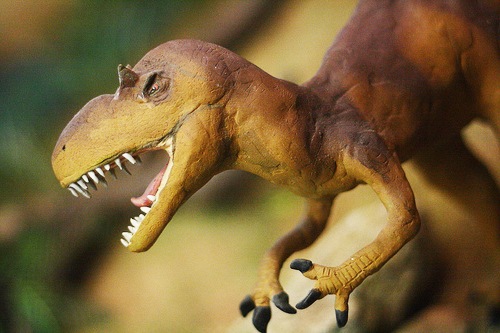
4. “It is me” or “It is I”?trex thumb 9 Most Confusing Confusions in English Grammar

Wrong: It is me, the great tyrant Tyrannosaurus!
Correct: It is I, the great tyrant Tyrannosaurus!
It is important to note that “is” is a linking verb, meaning it renames the subject with a subject predicate.
Now, normal transitive verbs have an object. (He sees me) Me = object.
Linking verbs have subject predicates instead. (That guy was I) I = subject predicate.
Here’s another example. – “A dog is a great pet.”
A dog = subject
a great pet = subject predicate
You can see that “subject = subject predicate”. A dog = a great pet. That’s why they are called linking verbs; because they link two subjects.
And since linking verbs link to subjects, subject pronouns must be used. So that’s why it is “It is I” and not “It is me”.
I hope you get what I’m saying. Unfortunately, I think Mario will never get it.
itsmemario thumb 9 Most Confusing Confusions in English Grammar
T-rex photo by Esparta

5. i.e. and e.g.

Wrong: Please volunteer to bring some food for the party, i.e., fries, nuggets, and chips.
Correct: Please volunteer to bring some food for the party. e.g., fries, nuggets, and chips
Believe it or not, last time, I thought i.e. and e.g. can be used interchangeably! But I was wrong. i.e. and e.g. have different meanings.
e.g. = For example
i.e. = That is/In other words (for clarifying stuff)
Here are some examples.
To stay healthy, eat vegetables, e.g., spinach. <— Here I used an example of a vegetable.
I love to eat the vegetable that I like the most (i.e., carrots). <— Here I used i.e. because it clarifies the “vegetable that I like the most”. I cannot use e.g. because there is no vegetable other than that.

6. Lightening

This is perhaps the most common spelling mistake ever.4975793827 e88e3b1f9d 9 Most Confusing Confusions in English Grammar
Wrong: Being struck by lightening is a shocking experience!
Correct: Being struck by lightning is a shocking experience!
LighteningThe present participle of lighten.
e.g. I was lightening the load on my camel because it was exhausted.
Lightning
A streak of static electricity through the sky, usually accompanied by thunder.
e.g. You got struck by lightning? That must have been a shocking experience!
Lighting
The arrangement of light, especially in photography.
e.g. The photo was dull because the lighting wasn’t good enough.
Photo by Owen Zammit

7. “If I was” or “If I were”?

Wrong: If I was an elephant, I would give you a ride.
Correct: If I were an elephant, I would give you a ride.
Wrong: If I were rude, I apologize.
Correct: If I was rude, I apologize.
“If I were” is more for situations when you are imagining things, usually followed by a sentence on what you would do in that situation.
If I were you, I would read more books about animals.
If he were an animal, he would be a parrot!
“If I was” is more for things that could have happened in the past or now.
If he was singing that well, he should become a singer. (This is an answer to a girl who told me that when her friend sang just now, her heart melted)
If she really was kind to animals, I respect her. (This is a thought after reading news about a girl saving a cat from drowning, but you are not really sure whether it’s true)
Here is an example of the differences between “If I were” and “If I was”.
If she was hardworking, she would be a famous singer by now. <– I’ve only met her once and all I know is she wants to be a famous singer.
If she were hardworking, she would be a famous singer by now. <– I know her very well; she wants to be a famous singer but she’s very lazy.
Conclusion: “If I were” is for imagination. “If I was” is for things that could have happened.

lie thumb 9 Most Confusing Confusions in English Grammar8. Lie down, don’t lie to me, and birds lay eggs

Oh dear. These 3 words are perhaps the most confusing as some parts of the three words are parts of each other.
Lie has two completely different meanings. The first meaning is to rest in a horizontal position. The second is to bear false witness.
Lay means to put into a position of rest or bring forth eggs.
Here are the tenses of the words:
Lie down – lie, lay, lain.
Don’t lie to me – Lie, lied, lied.
Lay eggs – lay, laid, laid.
That’s why they are confusing! They sound similar and you can easily have them mixed up!
Here are some examples of common mistakes when using those words.
Wrong: I have lied on the grass all morning.
Correct: I have lain on the grass all morning.
Wrong: laid on the couch.
Correct: I lay on the couch.
So, here’s three things to remember when you’re not sure how to use those words:
Remember that lie (don’t lie) and lay are regular verbs, which mean they add the usual suffix “-d” to form the past tense (lied, laid). Their past participles (have lied, have laid) are the same.
Remember that the word lie (lie down) is the most complicated; an irregular verb; doesn’t use “-d”; past tense is lay, and past participle is lain.
Remember that the word lay is the only transitive verb – You can’t “lay” on the bed; you must lay something. You can lay yourself on the bed, though.

9. Take and bring

This is probably one of the most confusing confusions in grammar!
Whether to use bring or take all depends on the perspective. You use take when the item is going away from the perspective and bring when the item is coming to the perspective.
For example, you and your friend are going to a place. You might ask your friend, “Are you going to bring your cell phone?”
If you’re not going but your friend is, you might ask your friend, “Are you going to take your cell phone?”
But still, it can be confusing. So, use substitutes instead.
“Are you going to carry your cell phone with you?”
Problem solved icon smile 9 Most Confusing Confusions in English Grammar .

I hope you’ve enjoyed my post! I hope that you are not confused now. LOL icon razz 9 Most Confusing Confusions in English Grammar .
So, have you ever made the grammar mistakes above? Please share your experience in the comments below. I know I’ve made every single one of them before. icon smile 9 Most Confusing Confusions in English Grammar


Web Designing Karachi hosting packages Web Designing e-commerce CMS website designing karachi Web Designing Pakistan Website Design Website Designing Web Hosting Web Design karachi online shopping laptop in karachi floor levelling Polished concrete sydney epoxy coatings glue removal concrete repairs concrete coatingsAtta ur rehman